Check out the cool trailer here: http://www.youtube.com/watch?v=venuVqxYZNI
To spread the word about her book, Katia has embarked on a virtual global tour. She has visited Haiti, France, India. Now, she's here at Kuumba. Please join us as we discuss Amadi's Snowman, diversity in children's literature and our missions as writers and moms:
Kelly: Katia, your wonderful picture book, Amadi's Snowman, gives African children a chance to see and hear themselves. I wish I had a book like yours as a child. I was one of those library kids, an eager reader who dove right into every book I got. I remember cherishing books like Miss Nelson Is Missing, Danny and the Dinosaur and Where the Wild Things Are. Those stories were magical, but something was missing.
Two decades later, I was reminded what it was. I read a picture book called Something Beautiful by Sharon Dennis Wyeth, illustrated by Chris Soenpiet and my life changed. In the face of that little African-American girl, I saw my nieces, cousins, kids around my neighborhood and the child I used to be. Reading that book not only touched my heart, but set me on a new path: I wanted to give back by writing for children. I wanted to write stories that gave black children reflections of their families, history and themselves. Now as a mom, it's even more important to me that my son and daughter have stories that represent their experiences.Being a mother of biracial children, do you feel that mission too?
Katia: Hello Kelly, First of all, thank you for offering me the opportunity to have this interesting conversation with you, and for the kinds words about Amadi's Snowman. To answer your first question, YES!, I absolutely, totally feel that mission, not only as the mother of biracial children, but also as the mother of two Third Culture Kids.
I was also one of those library children, and reading is a way of life for me. I look for answers to all of life's questions in books, always have. So, when I was pregnant with my first daughter, I eagerly started looking for books that would represent her and her family. That was in 2000, and I only found two: Black is Brown is Tan, by Arnold Adoff, and Billy and Belle, b y Sarah Garland, which was published in the U.K. in 1992. I was shocked, and it made me realize how difficult it is for white people to understand what it means to grow up as a minority and to not see oneself mirrored in things as important as books.
y Sarah Garland, which was published in the U.K. in 1992. I was shocked, and it made me realize how difficult it is for white people to understand what it means to grow up as a minority and to not see oneself mirrored in things as important as books.Having grown up in France with a Spanish mother whose French people in shops openly mocked (when they didn't insult her), and whom my friends didn't understand, means that I always had a keen understanding of what it means to be different, so that really struck a chord. And then, we moved to Nigeria, then to India, and my children are not only biracial, they also belong to the fast-growing population of Third Culture Kids, and again, same problem: there is barely anything out there describing their experience. TCKs, by the way, are children who spend a significant part of their childhood in cultures different from the culture(s) of their parents or passport, and that includes children of first generation immigrants.
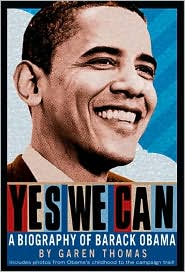
Our world is becoming increasingly global, and Obama's election feels very symptomatic in that respect. He's a TCK himself, with parents from different races and countries, who lived in Indonesia as a child, and I feel that aside from his outstanding qualities, his diverse background is something that appeals to the younger generations who seem to have a broader approach to life. One just has to see how his victory was celebrated the world over. No one can continue to limit their view of the world to what happens in their backyard.
The way I designed this blog tour is another example of how strongly I feel about bringing the whole world to our children. I wanted this to be as open and international as it could possibly be, because if our kids start exchanging ideas and information with other children who live all around the planet, regardless of the color of their skin, their religion, their customs, diet, ways of dressing, etc, then, a connection is created, and where there is a connection, the chances for open, unbiased dialog immediately increase. Sorry for that long answer. I feel very passionate about this subject, as you can see. So yes, I do long to see more and more children of diverse backgrounds and origins in books, and I do hope to contribute, in my small way, to increasing their numbers.
Kelly: Katia, I love the window books like yours open to the world. Through stories, my daughter here in North Carolina can feel kinship with children in countries like India, Haiti and Nigeria where Amadi's Snowman takes place. That's the transcendent power of writing. Characters such as your Amadi can transport children to their homelands, let them witness new experiences. But multicultural books connect children to something universal too. Children can have different skin colors, traditions, religious beliefs, but they're linked through emotions. No matter where they live, they can understand what joy, disappointment, frustration, hope feel like. In this way, multicultural books expand their reach, not just giving children of color mirrors, but helping all children to see that we're all more alike than different. Thank you.
I feel a sense of purpose and responsibility as I write. I've gone into classrooms and heard children say your character is just like me or your story made me think about my family. That makes me feel really good. My hope is that stories give children touchstones. I think that's one way to pull reluctant readers in. We hear a lot about schools wanting to reach young people who turn away from reading. Making sure our books show diverse cultures and experiences is a way to affirm children and let them know that their experiences matter. That commitment can turn reluctant readers into eager ones. It's troubling to me when I visit schools and children have few classroom opportunities to connect with diverse stories. Books are bridges. They can connect us to other cultures, imaginary lands and even parts of ourselves. How have children responded to Amadi's Snowman? How does that make you feel?
Katia: Before I answer your questions, I want you to know that I totally agree with you. Yes, books are bridges. And children are wonderful in the sense that they have not accumulated most of the fears and prejudices that seem to plague too many adults. They will not have misgivings about crossing those bridges. In fact, they are happy to. They are curious, and eager, and open. That's why education is so incredibly important. It can turn a young mind into an open, tolerant human being, or on the contrary, push them on the road of closed up ignorance, intolerance and bigotry. I honestly don't see how we could continue to live in a world where books so blatantly contradict the reality we live in. And the reality we live in is a multicultural reality; maybe a little more so in some places than in other, but it's certainly inevitable, and in my opinion, a cause for celebration.
Children's response to Amadi's Snowman has been overwhelmingly positive, so far. They love that he's so real; he's not perfect, but he's perfectible, the way we all are. A lot of children (and adults too, judging by the reviews we've gotten so far) can relate to the fact that he has never seen snow. The story touches so many themes that everyone can relate to : resistance to learning something new, reluctance to change. That's universal.
How does it make me feel? Immensely grateful and happy. This has been quite an adventure, with highs and lows, some frustrations, but so much joy, and I have the feeling the ride is not over. This blog tour, also, has turned into something really meaningful to me. I just had this clear idea of getting schools from different places involved, to create these bridges, exactly as you mention, but I didn't realize the impact it could have (nor the staggering amount of work that it was going to require, and I have to say a word for Tilbury's publicist, Sarah McGinnis, here, because I don't think I could have done it without her unfailing support.)
And it's certainly been worth all the work: I've loved talking to children here in India, and creating a picture of Nigeria for them that, I think, will be a little more accurate than the one they get from the media and the world around them. For instance, most of them had not realized that a lot of the issues that Amadi faces are in fact issues and problems faced by a large number of Indian children. When I mentioned that in India too there are kids at traffic lights who clean car windows, try to sell little items, etc, it was as if a light bulb went off in their heads. They also liked the fact that they eat fried plantains like Amadi, especially in the South of India.
We also talked about the way people dress in both countries, the weather, the games played here and there. And every time I discover new material sent to me from Nigeria, from Haiti, from Italy, and counting, I have shivers going up and down my back. Finally, seeing a little girl tell me on my first visit that she hates reading because it's boring, and on my second visit, when I asked the class if the book had changed the way they approached books and reading, seeing her raise her arm enthusiastically... Wow ! I write these words and again, I'm shivering. Basically, I'm experiencing what I've always sensed, intuitively: our job is one of the greatest in the world.
Kelly: I know what you mean about seeing that lightbulb go off for a child. It's like all of a sudden they read a book that they get -- and gets them -- and the walls are down. They're ready to find more books like it, need to find more like it. I once described reading Something Beautiful as taking a gulp of cold water after a long, hot day. Reading good books can satisfy you, refresh you and quench a thirst sometimes you didn't even know you had.
Other books have done that for me too: Coming on Home Soon by Jacqueline Woodson, I Dream of Trains by Angela Johnson and most recently Blues Journey by Walter Dean Myers. (Thank you, Rotem, for the recommendation :). I agree that we have one of the greatest jobs in the world. We get a chance to empower children and help inspire a lifelong love of reading. It's a blessing.
I love the way you decsribed children's reaction to your book. It's so important to celebrate differences and appreciate commonalities. You created a real character in Amadi. Were there children's books that inspired you as you worked on yours? I'd love to see more African children's books in schools. But we have a long way to go. Your blog tour is one way to raise awareness. What else can we do as writers? mothers?
Katia: I remember reading Elizabeti's Doll, by Stephanie Stuve-Bodeen, quite a lot when I first wrote Amadi's Snowman. I LOVE Jacqueline Woodson's books. I heard her speak at a SCBWI conference, a couple of years ago. She's very inspiring.
I think we're doing what we can, as writers. We write and we broach the subjects that we feel are important, and we try to fill in the gaps. I do hope to have more opportunities to have conversations like the ones I had with the children at the Vidyaranya school, here, in Hyderabad, in the future. This is something I discovered about myself : I didn't know I would enjoy school visits as much as I do. I'm usually quite uncomfortable in crowds, but this was different, and I felt right at home. It was a great experience.
As mothers, having such books around and reading them to our children is one way of giving them exposure to other cultures. I have to admit that my family is very lucky in that department. We not only live in diverse countries (Nigeria, the US, India, and who knows where we'll be going next), but our own family is quite a patchwork, with ties to Haiti, France, Spain and the US. We could not not live a multicultural life even if we wanted to - and we definitely don't.
Kelly: I agree that it's important for moms to teach our children the beauty of other cultures. For me, it's also essential to be an advocate. If we see that diverse books are missing in bookstores, schools or libraries, we should mention it and try to help turn things around. Change can happen. It can start with a whisper and turn into a roar. So many times I meet parents and even teachers and librarians who are searching for great, multicultural books to share with kids. At The Brown Bookshelf, we're working to raise awareness of African-American children's books. But it will take time for true parity to grow. Having conversations like this can help. Thank you for taking the time to share your thoughts and for writing Amadi's Snowman. It's a lovely story. I wish you much success.
Katia: Yes, advocacy is essential. That's what this blog tour is doing, in a very concrete way, I hope. Writing and sharing our books, and other books with characters from diverse backgrounds and cultures is another way of advocating our cause, as mentioned above. And initiatives like The Brown Bookshelf is yet another one. Anything that works, I say :) Thank you, Kelly, for hosting this conversation and being a part of our tour. I also wish you continued success.
To read more of Katia's fascinating global virtual tour, please visit: http://katianovetsaintlot.blogspot.com/
To read more of Katia's fascinating global virtual tour, please visit: http://katianovetsaintlot.blogspot.com/